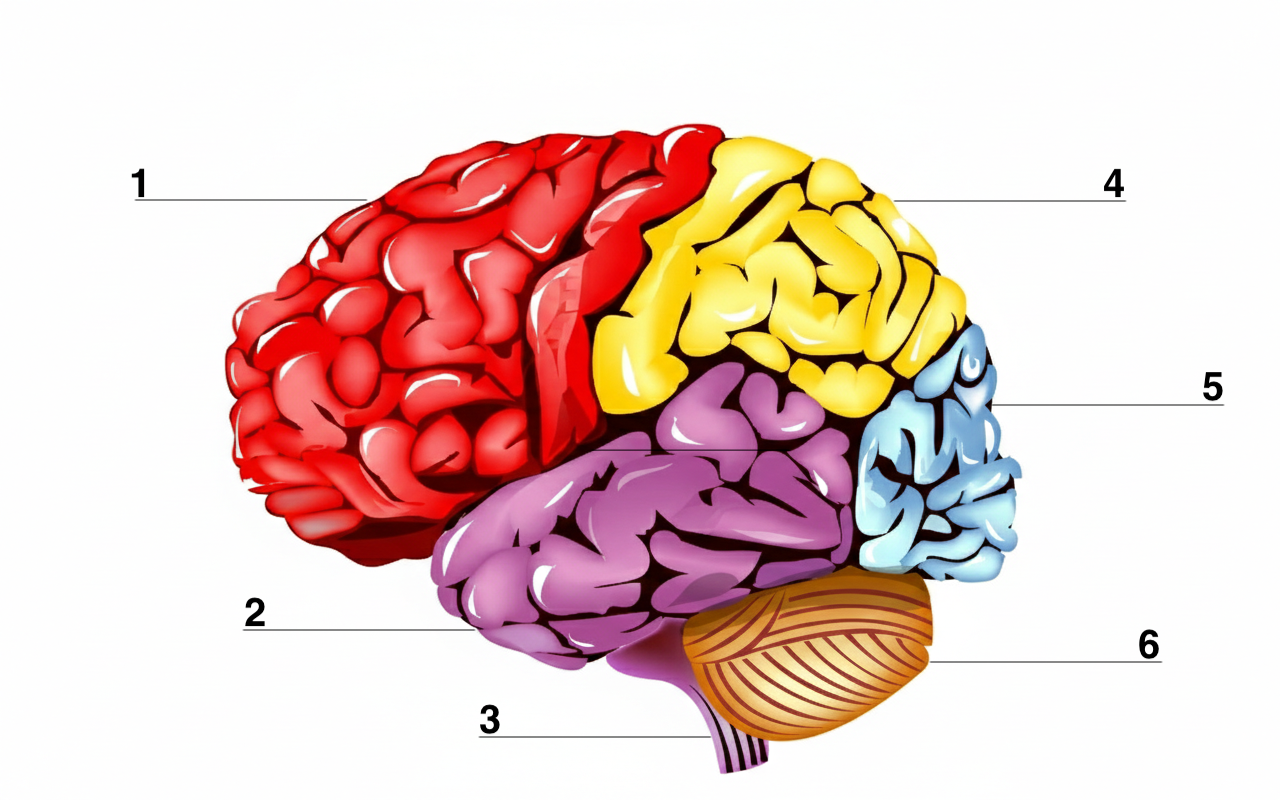
Brain Diagram
Discover how your brain creates, stores, and retrieves memories
Every moment you're learning, your brain physically changes through neuroplasticityβforming new connections and strengthening pathways with each practice session.
As an educator, understanding how different brain regions support learning helps you design more effective teaching strategies. When you know where learning happens, you can better understand how it happens.
The structures you'll explore aren't just anatomical termsβthey're the physical foundation of every memory your students form, every skill they master, and every concept they understand.
Research shows that retrieval practice (testing yourself) is one of the most powerful learning techniques. By actively recalling information instead of passively reviewing it, you strengthen neural pathways and improve long-term retention.
Actively retrieving information from memory produces stronger long-term retention than re-reading. Effortful retrieval modifies memory representations in ways that support future recall, particularly when retrieval is followed by feedback.
Distributing practice over time leads to better long-term retention than cramming. Spacing allows memory consolidation and creates effortful retrieval opportunities that strengthen learning.
Actively linking new information to relevant prior knowledge by explaining, relating, or making meaning, creates more durable and accessible memories.
Working memory has limited capacity. Learning is most effective when instructional design manages cognitive load to support the construction of long-term knowledge.
This pathway uses evidence-based techniques to help you master brain anatomy and learning science
Identify the key structures involved in learning and memory
Test your understanding of key learning science principles